Get a free quote now.


Plantar Fasciitis in Pacific Beach: How Sports Chiropractic and Shockwave Therapy Can Help Heel Pain


Plantar Fasciitis in Pacific Beach: How Sports Chiropractic and Shockwave Therapy Can Help Heel Pain
If the first few steps out of bed leave you with sharp pain on the bottom of your heel, you're not alone.
Plantar fasciitis is one of the most common causes of heel pain we treat at Team Elite Chiropractic. Whether you're walking the boardwalk in Pacific Beach, running on the beach, or spending long days on your feet, heel pain can quickly start to affect everything you do.
The good news?
Plantar fasciitis is very treatable, especially when you catch it early.
Who Gets Plantar Fasciitis?
In Pacific Beach, we see plantar fasciitis in:
- Runners
- Walkers
- Beach volleyball players
- Beachgoers
It's most common in adults between 40 and 60 and shows up a little more often in women than men. That said, anyone can develop it, and sometimes there's no clear reason why.
What Causes Heel Pain in Pacific Beach?
The plantar fascia is a thick band of tissue that runs along the bottom of your foot and attaches to your heel. When it's overloaded, it becomes irritated and painful.
Many people assume walking in the sand is to blame. In reality, people who are in the sand regularly may actually have stronger feet because of it.
The patients we see most often include:
- People who were less active and jump back into walking or running too quickly
- People who start running on the beach before their feet are ready for it
- Avid walkers logging miles on hard surfaces like the boardwalk or around Mission Bay
- Anyone walking long distances without supportive shoes or arch support
Footwear plays a big role, too. Flip-flops, flats, sandals, and heels offer very little arch support. Supportive options exist, but they aren't always the most stylish choice.
Early Signs of Plantar Fasciitis
The most common symptoms include:
- Pain on the bottom of the heel, where the plantar fascia attaches
- Sharp pain with your first steps in the morning
- Pain when the big toe is bent upward, which stretches the plantar fascia
Not all heel pain is plantar fasciitis. Fat pad syndrome, for example, happens when the natural cushion under the heel thins over time, which is more common as we age. It can feel like a bone bruise in a similar spot.
That's why every visit starts with a hands-on evaluation. We pinpoint where the pain is coming from and look further up the chain at the calves and the back of the legs, since tightness there often contributes.
How We Treat Plantar Fasciitis at Team Elite Chiropractic
There's no single fix for plantar fasciitis. Treatment usually combines several approaches.
Shockwave Therapy
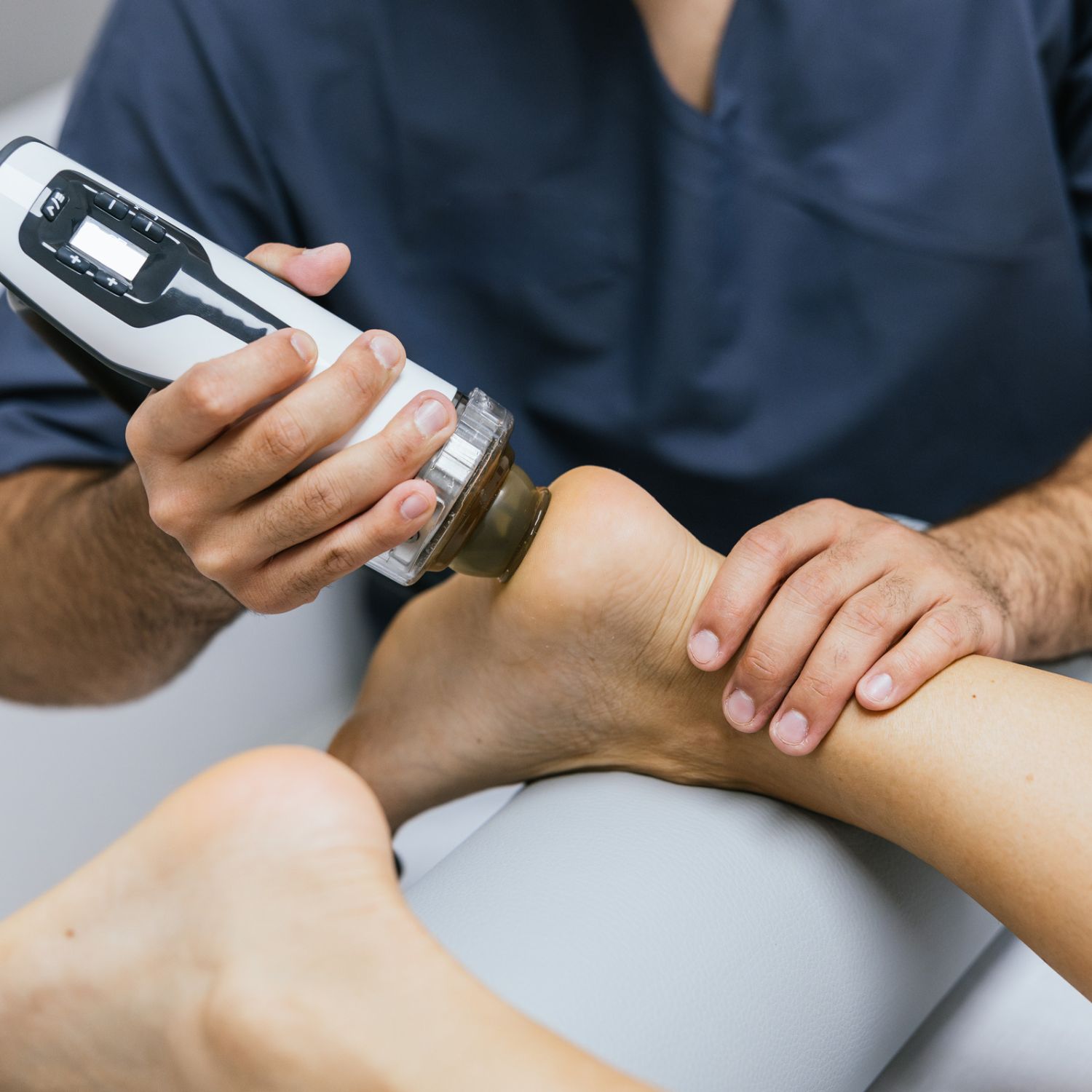
Plantar fasciitis is one of the main reasons we brought shockwave therapy into our Pacific Beach office. It's especially helpful for stubborn cases of fasciitis and tendonitis that have lingered for months or even years, and it helps support healing in the injured tissue.
Class IV Laser Therapy
Class IV laser therapy for plantar fasciitis helps calm down acute pain so you can move more comfortably while you heal.
Chiropractic Adjustments
The foot is made up of 26 bones and many small joints. When one of those joints isn't moving well, an adjustment can help. Adjustments are one part of the treatment plan, not the whole plan.
Soft Tissue Therapy
Tight calves often contribute to plantar fasciitis, so we treat both the back of the leg and the bottom of the foot. This may include Active Release Technique (ART) and instrument-assisted soft tissue mobilization, one of our go-to treatments for plantar fasciitis.
Custom Orthotics
For many patients, especially those with flat feet, arch support makes a big difference. We fit custom Formthotics in the office. These soft foam inserts with a solid arch are trimmed to fit your shoes, heated, and molded to your foot while you stand in a neutral foot and ankle position.
Night Splints
A night splint holds your foot and toes flexed up toward your shin while you sleep, keeping the plantar fascia gently stretched overnight. They take some getting used to, but they can help reduce that painful first step in the morning.
What You Can Do at Home
Home care is a big part of recovery. We typically recommend:
- Rolling the bottom of your foot on a lacrosse ball or frozen water bottle
- Rolling out your calves
- Stretching the calves and the bottom of the foot, such as kneeling with your toes tucked under you
- Strengthening the foot with towel scrunches and calf raises once pain improves
- Wearing shoes with good arch support when walking longer distances
How Long Does Plantar Fasciitis Take to Heal?
Recovery depends on how long symptoms have been present and how severe they are.
Typical timelines include:
- Mild cases: 6 to 8 weeks
- Moderate cases: 3 to 6 months
- Chronic cases: 6 to 12 months
Unfortunately, many people wait. They assume the pain will go away on its own, and a couple of months later it's worse. Catching it early and staying consistent with home exercises leads to a much better outlook.
What Recovery Can Look Like
Here's an example based on patients we've treated.
A 45-year-old woman came in after three to four weeks of pain on the bottom of her foot. It started on vacation after a lot of walking in flip-flops with no arch support, and it wasn't going away. She had all the classic signs of plantar fasciitis.
Her treatment plan included:
- Shockwave therapy one to two times per week
- ART and instrument-assisted soft tissue work on the foot and calf
- Custom orthotics fitted in our office
- Home exercises, starting with rolling and stretching and adding strengthening as pain improved
She came in twice a week at first, then once a week. After six to eight visits over about six weeks, her pain was fully resolved.
This was one of our faster recoveries, and every patient is different. Starting treatment early helped.
Looking for Plantar Fasciitis Treatment in Pacific Beach?
If you're dealing with heel pain, especially with your first steps in the morning, don't wait for it to go away on its own. Our team can identify what's causing your pain and build a treatment plan to get you back to walking, running, and playing on the beach without pain.
Schedule your appointment at our Pacific Beach office and ask about shockwave therapy for plantar fasciitis.
Related Posts